Bristol Stool Form Scale
A simple way to describe stool consistency — and why it matters
Visual guide: Bristol Stool Form Scale
Illustrated Bristol Stool Scale — Types 1 to 7
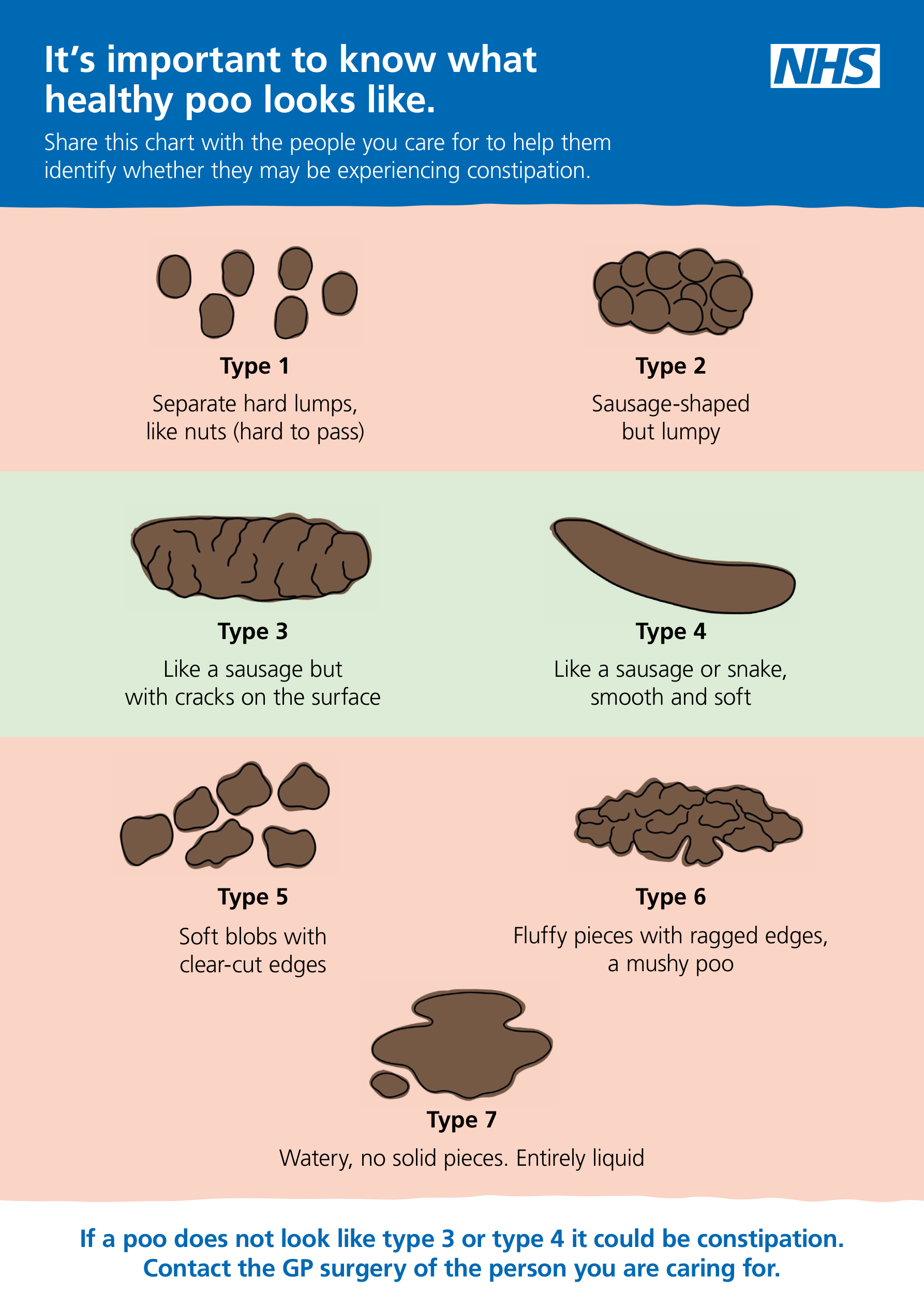
Illustration is an NHS-style patient chart. Original graphic generated for this site based on the Bristol Stool Form Scale (Heaton & Lewis).
What is the Bristol Stool Scale?
A standard medical tool classifying stool into seven types by appearance and consistency. Consistency is often more informative than frequency.
The seven stool types (overview)
Types 1–2: Constipation spectrum
- Type 1: Separate hard lumps
- Type 2: Lumpy sausage
Types 3–4: Normal / optimal
- Type 3: Sausage with cracks
- Type 4: Smooth sausage/snake
Types 5–7: Diarrhoea spectrum
- Type 5: Soft blobs, clear edges
- Type 6: Mushy stool, ragged edges
- Type 7: Watery, no solids
How clinicians use the Bristol scale
Helps distinguish overflow vs true diarrhoea, functional vs inflammatory disease, and track response to treatment.
Using it accurately
- Choose the type matching most stools
- Focus on consistency
- Track changes over time
Key takeaway: The Bristol Stool Scale turns vague descriptions into useful clinical information. Consistency matters more than count.